A branch snaps somewhere behind your character. Rain moves across the landscape, footsteps change as you leave a stone path, and a nearby character reacts to a decision you made earlier. These details can make a game feel like a place you are exploring rather than a series of tasks on a screen.
Immersion happens when players become absorbed in an experience. Graphics contribute to that feeling, but so do sound, movement, storytelling, and the consistency of the game world. Technology helps developers connect these elements and make them respond to the player.
From virtual reality to more expressive animation, gaming technology gives creators new ways to build believable environments and meaningful interactions.
Detailed Graphics Give Worlds Depth
Visual detail helps players understand the spaces around them. Lighting can establish the time of day, surface textures can suggest age or wear, and weather can change the atmosphere of a familiar location.
Rendering techniques such as ray tracing can improve how light, reflections, or shadows behave when implemented effectively. These effects may help scenes feel more physically consistent.
However, realism is only one route to immersion. A stylised game can be equally absorbing when its colours, shapes, and movement support a clear artistic vision. Consistency often matters more than the number of visible details.
A world becomes convincing when its visual elements work together and help players understand what they can do within it.
Spatial Audio Makes Environments Feel Larger
Sound communicates information that may be outside the player’s view. The direction of footsteps, the distance of a voice, or the echo inside a room can help establish where something is happening.
Spatial audio systems can position sounds around the listener, creating a stronger sense of location. With suitable equipment and implementation, players may distinguish activity above, behind, or beside them.
Ambient sounds also give environments character. Wind through trees, machinery in a factory, or conversations in a market make a setting feel active beyond the immediate objective.
Silence has a role too. A sudden absence of background noise can build tension and encourage the player to pay closer attention. Effective audio design uses these changes deliberately.
Virtual Reality Connects Movement With Perspective
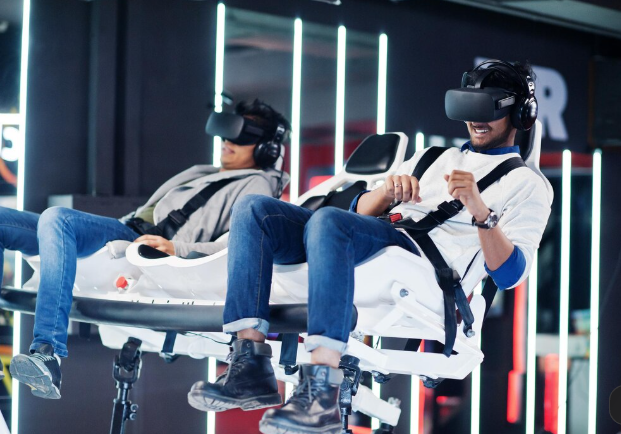
Virtual reality places the game environment around the player’s field of view. Turning the head changes the perspective, while tracked controllers can allow actions such as reaching, pointing, or manipulating objects.
This relationship between physical movement and in-game response can create a strong sense of presence. Looking around a corner or examining an object at close range becomes a direct action.
The experience depends on careful design. Comfortable movement options, responsive tracking, readable interfaces, and appropriate performance all affect how usable a VR game feels.
Developers also need to account for different spaces and abilities. Seated modes and adjustable controls can help more players participate comfortably.
Haptic Feedback Adds a Physical Layer
Haptic feedback uses vibration or other tactile effects to communicate events through a controller or compatible device.
A subtle pulse might indicate footsteps, while a stronger effect could accompany a collision. Some controllers can also vary trigger resistance to support particular actions.
These sensations give players another source of information. When they align with sound and animation, an action may feel more complete.
Restraint matters. Constant or excessive feedback can become distracting, so useful haptics distinguish between events and allow players to adjust or disable the effects.
Responsive Controls Make Actions Feel Natural
Immersion can weaken when a character responds slowly or moves unpredictably. Responsive controls help players feel connected to their actions.
Animation systems contribute by linking movement with the environment. A character might adjust their footing on uneven ground, reach towards a nearby surface, or transition smoothly between walking and running.
The response should still match the game’s intended style. A heavy vehicle may turn slowly by design, while a fast platforming character needs precise reactions. Clear feedback helps players understand those differences.
When controls and animation work together, players spend less attention managing the interface and more attention engaging with the world.
Physics Systems Make Interaction More Convincing
Physics simulations can influence how objects fall, collide, move, and respond to force. They give players opportunities to test ideas within the environment.
A player might push a crate into position, roll an object down a slope, or use a falling structure to open a route. Such interactions become satisfying when their results are understandable.
Games often simplify physical behaviour to preserve performance and enjoyable play. The important feature is consistency: similar actions should usually produce similar results.
Destructible environments can add another layer, but destruction becomes meaningful when it changes the available space or choices.
Character Behaviour Brings Life to the World
Non-player characters help determine whether a setting feels occupied. Their movement, conversations, and responses can make locations seem active even when the player is observing.
Game AI can support behaviours such as taking cover, investigating noises, following routines, or reacting to nearby events. These systems do not need to imitate human intelligence fully to create convincing encounters.
For example, an opponent who searches the player’s last known location can make hiding feel more meaningful. A shopkeeper who acknowledges a previous interaction can give a town a sense of continuity.
Believability depends on behaviour that fits the situation. Complex systems are useful when they produce clear, consistent responses rather than unexpected actions that confuse the player.
Interactive Storytelling Gives Choices Weight
Technology can help games track decisions and reflect them through dialogue, relationships, and later events.
A player’s approach to a problem might affect who offers assistance or how a community responds. Even smaller acknowledgements can make participation feel meaningful.
Branching stories require careful writing and design. Players need enough context to understand a decision, and its consequences should fit the established world.
Immersion also comes from environmental storytelling. A damaged room, an abandoned campsite, or a collection of personal objects can suggest what happened without interrupting play for an explanation.
Multiplayer Creates Experiences That Cannot Be Fully Scripted
Other players bring unpredictability to a game. Cooperation, competition, and shared discovery can create memorable moments that emerge through interaction.
Voice communication, gestures, and shared objectives help players coordinate. A difficult encounter may become more engaging because success depends on understanding each other.
Technical reliability is important. Lag, disconnected sessions, and poor communication tools can interrupt the experience. Community design matters as well: useful moderation and player controls help maintain spaces where people can participate.
Social immersion grows when the game supports both the activity and the relationships formed around it.
Accessibility Helps Players Stay Engaged
An immersive game must give players usable ways to interact. Small text, unclear instructions, or inflexible controls can create barriers that pull attention away from the experience.
Options such as remappable controls, adjustable subtitles, visual alternatives to sound cues, and configurable difficulty can help players engage more effectively.
Customisation also supports different preferences. Some players may want reduced camera movement or fewer visual effects, while others prefer more detailed feedback.
These choices allow the experience to fit the player without requiring everyone to use the same settings.
Strong Design Connects the Technology
Advanced features cannot create immersion on their own. A detailed world may still feel unconvincing if characters ignore events or controls make simple actions frustrating.
The strongest experiences connect graphics, sound, interaction, and storytelling around a clear purpose. Each element gives the player information and responds in ways that make sense.
Technical performance supports this connection. Stable presentation and timely responses help keep attention within the game, while interruptions can expose the systems behind it.
Developers therefore need to consider how features work together, including when a simpler approach will serve the experience better.
Conclusion
Gaming technology creates more immersive experiences by making virtual worlds easier to perceive, interact with, and understand. Spatial audio, responsive movement, tactile feedback, and meaningful character behaviour can all strengthen the player’s connection to a game.
Their value depends on thoughtful implementation. When technology supports consistent rules and purposeful design, players can become absorbed in the places they explore and the choices they make.
Read more: How Artificial Intelligence Is Changing Everyday Technology