A Formula 1 pit stop lasting less than 2 seconds sounds almost impossible. If you 1x Bet login Bangla, you can also bet on the best Formula 1 teams too.
In that time a car must:
- arrive;
- be lifted;
- have all 4 wheels removed and replaced;
- and be released.
Yet sub-two-second stops have become a remarkable feature of modern Formula 1. The achievement is not the result of one technological breakthrough, but of 3 other elements: meticulous teamwork, engineering and repetition. Once you login into 1xBet Bangla, you will also discover an outstanding platform full of bets on motorsports too.
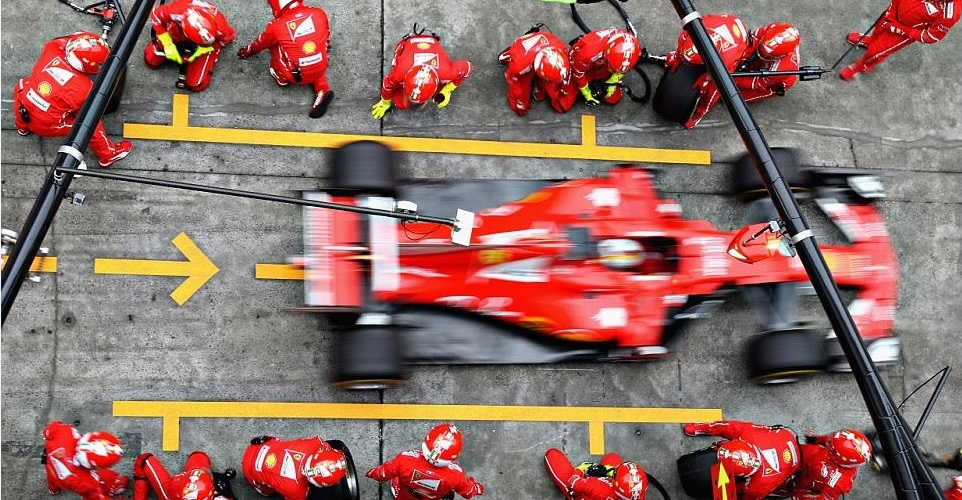
The foundation is choreography. A pit crew can involve more than 20 people, each with a precisely defined task. 4 wheel-gun operators remove and tighten the wheel nuts. At the same time, other crew members operate the jacks, remove the old wheels, fit the new ones, stabilize the car and, when necessary, adjust the front wing or clean components. Everyone moves simultaneously rather than sequentially.
A spectacular and highly coordinated choreography
Technology is equally important. Teams heavily modify their wheel guns, optimizing their internal mechanisms, sockets and grips for speed and reliability. Modern guns can remove a wheel nut in less than two-tenths of a second. The equipment is powerful, but the human operator still controls the crucial operation. Formula 1 rules deliberately limit automation: wheel changes and jacking remain fundamentally human tasks.
Practice turns this complexity into instinct. Before the 2019 season, for example, Williams performed more than 1,200 practice pit stops at its factory. Across the Formula 1 grid, crews repeatedly rehearse their movements so that every mechanic knows exactly where to stand, when to move and how to react if something goes wrong.
The driver’s role is also critical. The car must stop accurately on its marks. A poor position can force the crew to adjust, costing precious tenths and potentially creating a safety problem. Meanwhile, the pit crew has to coordinate the release using a traffic-light system, ensuring the car leaves only when the wheel-changing operation is complete.
The results demonstrate how far this system has evolved. Red Bull recorded a 1.82-second stop for Max Verstappen at the 2019 Brazilian Grand Prix, breaking its previous 1.88-second record. In 2021, Red Bull remained the only team to record multiple sub-two-second stops, achieving five, including another 1.88-second stop.