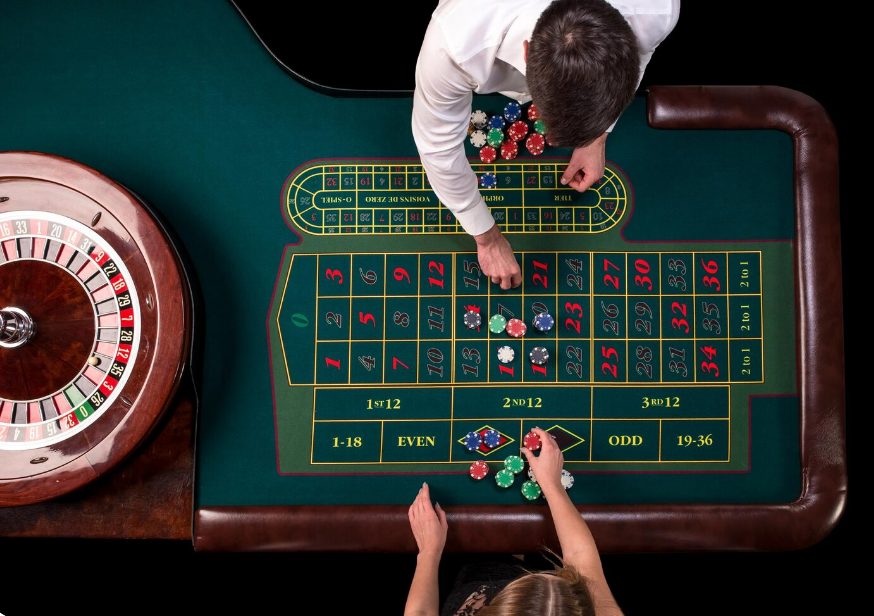
Before a winning number is announced, roulette has already delivered a performance. The ball circles the rim, its rolling sound sharpening as it loses speed. Below it, the numbered rotor turns with a steadiness that makes the ball’s eventual descent seem almost disorderly. A few impacts follow, then a pocket holds it still. The entire sequence transforms a mechanical outcome into something people can watch, hear and anticipate.
That physical progression helps explain roulette’s enduring place in the kasino experience. The wheel gives uncertainty a visible form. Its materials establish character, its movement creates continuity, and its sound communicates changes before the result becomes clear. Examined as a piece of hardware, it offers a detailed lesson in how engineering becomes an experience.
The furniture is part of the mechanism’s appeal
A traditional roulette wheel belongs as much to the visual language of fine furniture as to gaming equipment. A broad wooden rim frames the moving components, while polished metal around the centre catches light as the rotor turns.
Mahogany is a familiar part of that appearance, although construction varies. Cammegh’s Continental wheel, for example, is illustrated with mahogany veneer and a stainless-steel turret. The manufacturer also offers different wood finishes and metal treatments across its range.
The distinction between veneer, structure and finish matters. A luxurious appearance does not require every component to be carved from solid timber. The visible surface and the underlying construction have different jobs.
From a design perspective, the wood grain gives the object warmth and scale. The metal provides sharper highlights. Together, they make the wheel look substantial before it moves.
Smooth motion depends on hidden precision
The most noticeable characteristic of a well-presented wheel may be its apparent effortlessness. The rotor turns smoothly, without demanding attention for the machinery supporting it.
That impression rests on components the spectator rarely studies. Cammegh’s Classic specification includes a bearing described as maintenance-free for life and an anti-warp composite structure. Its Connoisseur model uses a durable racetrack material designed for stability across changes in temperature and humidity.
These are practical engineering concerns with visible consequences. A wheel must operate as a physical object in a real room, where materials, alignment and wear matter.
The design achievement is making those concerns recede into the background. Spectators notice the uninterrupted rotation, while the bearing and supporting structure do their work out of sight.
The ball supplies the soundtrack
Roulette’s sound changes throughout a spin. The initial rolling motion gives way to less regular contacts as the ball descends, encounters deflectors and meets the pocket separators, often called frets.
That transition provides an audible sense of progression. A listener can recognise that the round is approaching its conclusion without reading a display.
The familiar white ball is sometimes described as ivory, but that should not be assumed of modern equipment. Cammegh supplies roulette balls in Ivorine and Teflon, including different sizes. The traditional appearance can therefore coexist with contemporary materials.
The sensory effect comes from the relationship between ball and wheel: rolling, contact, rebound and eventual rest. The sound belongs to the action producing it, which gives it a physical credibility that a recorded effect must work to reproduce.
Friction gives the round its rhythm
Friction is usually something digital designers try to remove. In roulette, resistance is part of the performance.
As the ball loses speed, its path changes. It leaves the outer track and enters a more visibly unsettled phase before reaching a pocket. The sequence moves from repetition to interruption, then resolution.
That progression creates a natural structure for attention. The opening circles establish rhythm. The descent breaks it. The final resting place answers the question everyone has been following.
A physical wheel makes that transition observable, but observation should not be confused with reliable prediction. The clicks and bounces communicate movement through the spin; they do not provide a dependable signal for choosing the winning number.
Digital roulette inherits a demanding reference point
An online roulette category brings the wheel’s recognisable language into a screen-based setting. The design challenge depends on the format.
A computer-generated version must represent rotation, descent and settlement through animation and sound. A live-dealer version presents physical equipment through cameras and microphones, with the viewing angle determining what the audience can follow.
In either case, the interface has to connect the betting layout to the result clearly. A convincing wood texture is only one detail. Readable numbers, understandable controls and an unambiguous settlement state also shape the experience.
The physical wheel sets a demanding reference because its movement and sound occur together. Digital presentation has to preserve that relationship through rendering or broadcast.
A phone changes how the details are perceived
On a small screen, surface detail competes with functional information. Wood grain and metal reflections may establish atmosphere, but the player still needs to identify selections, stakes and results.
For adults using the kasino download link, the destination is Betika Tanzania’s broader betting application. Its Google Play listing advertises kasino games and carries an adults-only, 18+ rating.
The transition from table to phone changes the sensory balance. Physical presence becomes an image; room sound becomes device audio. Clear presentation becomes especially important when the object’s size and material weight can no longer speak for themselves.
Why the wheel remains a design reference
For adults exploring an online kasino, roulette provides a useful example of how much experience can be built around a single object.
Its appeal comes from coordinated details: a stable frame around moving parts, polished surfaces beside numbered pockets, smooth rotation followed by irregular impacts. Each contributes to a sequence with a clear beginning, development and conclusion.
The premium aesthetic does not change the odds or guarantee a favourable result. Its achievement is experiential: precision engineering makes the movement convincing, materials give it character, and physical sound makes the ending tangible. Long before the number is called, the wheel has made an uncertain event feel substantial.