Art has always evolved alongside the tools people use to create it. Paint pigments, photography, and film each opened new ways to express ideas and interpret the world. Digital technology continues that evolution, giving artists opportunities to create beyond the limits of a traditional canvas.
Today, an artwork can be a digital illustration, an animated sculpture, an interactive installation, or a virtual environment. These forms expand what artists can make and how audiences experience their work. Understanding this change means looking beyond the technology itself to the creative decisions, relationships, and questions it introduces.
Expanding the Artist’s Toolkit
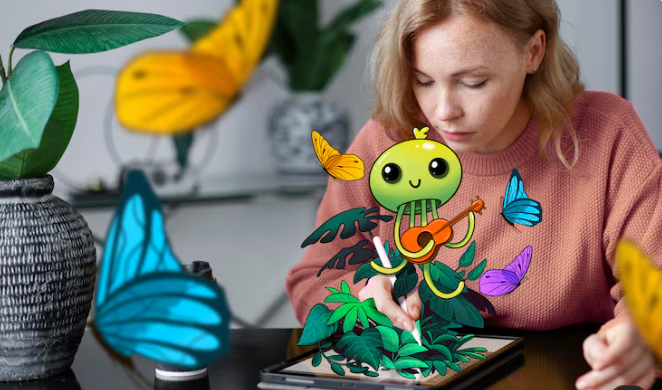
Digital tools allow artists to combine techniques that once required separate materials and workspaces. A drawing tablet can support sketching, painting, lettering, and image editing within the same project. Three-dimensional modeling software offers ways to experiment with shape, texture, and lighting before producing a physical object.
One of the most useful features of digital creation is the ability to revise. Artists can rearrange compositions, adjust colors, or explore several versions without permanently changing the original. Layers make it possible to work on different elements independently, while saved versions preserve earlier ideas.
This flexibility encourages experimentation. An illustrator might test an unfamiliar color palette, while a sculptor might explore a form that would be difficult to construct by hand. The tools make these experiments easier, but the artist still decides which version communicates the intended idea.
Blending Physical and Digital Art
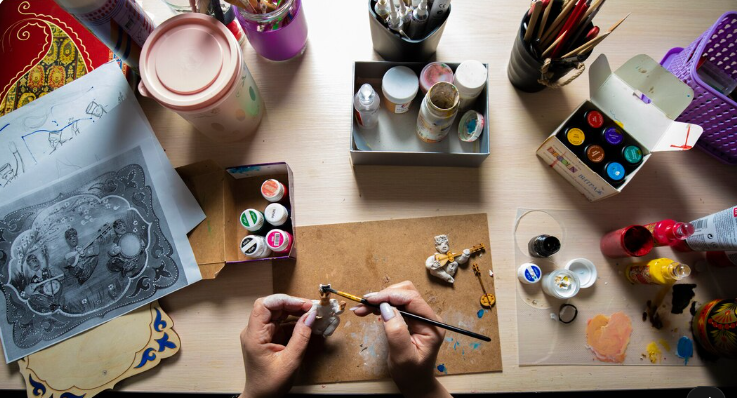
Digital creativity does not require artists to abandon traditional materials. Many creative processes move between physical and digital methods.
An artist might begin with a pencil sketch, scan it, and develop the composition digitally. Another might print a digital design onto fabric and add embroidery or paint. A sculptor could use a digital model to plan an object, then finish its surface by hand.
These combinations bring together different qualities. Physical materials offer texture, weight, and visible traces of human touch. Digital processes provide flexibility, repetition, and precise control.
The result is a broader creative language. A single artwork can carry the irregular marks of a handmade piece alongside the movement or structure made possible by software.
Turning Viewers into Participants
Traditional artworks often invite people to observe and interpret. Interactive digital art can also invite them to influence what happens.
An installation might respond to a visitor’s movement, changing its colors or sounds as the person crosses a room. A projected artwork could transform when viewers approach it. An online piece might allow visitors to choose paths through a visual story.
In these experiences, the audience becomes part of the artwork’s behavior. Different visitors may encounter different sequences, making each experience slightly different.
This changes the artist’s role as well. Instead of designing only a finished image, the artist designs a set of possibilities. They must consider how people will interact, what responses are meaningful, and how the experience supports the work’s central idea.
Creating Immersive Artistic Experiences
Virtual reality and augmented reality offer additional ways to explore art through space.
Virtual reality can place viewers inside a designed environment. Rather than looking at a landscape, a visitor may move through it, encountering images, objects, and sounds from different positions.
Augmented reality can add digital elements to a physical setting. A mural might reveal an animated layer through a compatible device, or a sculpture could be accompanied by digital imagery that helps tell its story.
These formats offer creative possibilities, but immersion alone does not make an artwork effective. The experience needs a clear purpose. Movement, sound, and interaction work best when they deepen the subject rather than simply attract attention.
Opening More Routes to Artistic Expression
Digital creativity can make some forms of art easier to begin. A person with access to a suitable device and affordable software can experiment with illustration, animation, or design without maintaining a large studio.
Online tutorials and creative communities also provide routes for learning. Beginners can observe techniques, share work, and receive feedback from people outside their immediate surroundings.
However, access remains uneven. Devices, reliable internet, software costs, and accessibility barriers can still limit participation. Digital tools expand opportunities, but those opportunities are not available to everyone equally.
A more inclusive artistic future depends on accessible design, affordable resources, and support for people with different needs and levels of experience.
Connecting Artists Across Distances
Digital communication makes collaboration possible without requiring every contributor to work in the same location.
An illustrator, musician, and animator can contribute to a shared project from different places. They can exchange files, discuss revisions, and build a work that combines their skills.
These collaborations can introduce artists to unfamiliar perspectives and methods. They also require clear communication about responsibilities, credit, and creative direction.
Successful collaboration is more than exchanging digital files. It involves understanding how each contribution supports the whole and respecting the people behind the work.
Introducing New Questions Through Artificial Intelligence
Artificial intelligence adds another dimension to digital creativity. Artists can use generative tools to explore visual directions, test compositions, or develop starting points for further work.
The creative process may involve writing instructions, selecting results, revising details, and combining generated material with original drawing, photography, or design. The degree of human involvement varies considerably between projects.
These tools also raise questions about authorship, consent, and the material used to train systems. Artists and audiences may want to understand how an image was produced and whose work contributed to the process.
Thoughtful use involves more than producing an appealing result. It includes considering transparency, respecting other creators, and making deliberate choices about how the tool serves the artwork.
Changing How Art Is Shared and Preserved
Digital platforms give artists additional ways to present work, build portfolios, and reach audiences. An online exhibition can introduce a project to people who cannot visit a physical gallery.
Yet digital distribution brings challenges. Images can be copied without permission, platform visibility can be unpredictable, and attracting attention may compete with time spent creating.
Preservation is another concern. A painting needs appropriate physical care; a digital artwork may depend on particular file formats, software, hardware, or online services. If those systems become unavailable, the work may stop functioning as intended.
Artists and institutions therefore need to preserve both the files and the information required to display or operate them.
Keeping Human Meaning at the Center
As digital tools become more capable, artistic intention remains essential. Technology can help produce an image or build an experience, but meaningful art depends on what the creator chooses to communicate.
Personal memories, cultural identity, curiosity, and lived experience give work its direction. Decisions about color, pacing, composition, and interaction shape how an audience encounters that meaning.
The future of modern art will likely contain many approaches: handmade objects, digital environments, interactive works, and combinations that are still emerging. Digital creativity expands the possibilities, while artists give those possibilities purpose.